Reading ability varies greatly from student to student, especially during the early stages of education. That’s where Lexile reading levels come in—they help teachers, parents, and students understand reading proficiency in a measurable way. Developed by MetaMetrics, the Lexile Framework assigns both readers and texts a numeric value. These values, known as Lexile measures, allow you to match a reader’s ability with books or reading materials that will support and challenge them appropriately.
In this post, we’ll explore the Lexile reading levels by grade, how to use the chart effectively, and why it matters in your child’s academic journey.
What Is a Lexile Measure?
A Lexile measure is a number that represents either a student’s reading ability or the difficulty of a text. These measures are expressed as a number followed by an “L” (e.g., 850L). The scale ranges from below 200L for beginning readers and texts to above 1600L for advanced readers and college-level materials.
Lexile measures are based on factors like sentence length and word frequency. They’re often determined through standardized reading tests and are widely used in schools to assess reading growth.
Why Lexile Levels Are Important
Lexile levels serve as a tool to:
- Match students with reading materials that suit their skill levels
- Track progress over time
- Identify areas where students may need extra help
- Encourage independent reading and comprehension
By using Lexile levels, educators and parents can make informed decisions about appropriate reading materials, ensuring that children are neither bored with too-easy texts nor overwhelmed by overly difficult ones.
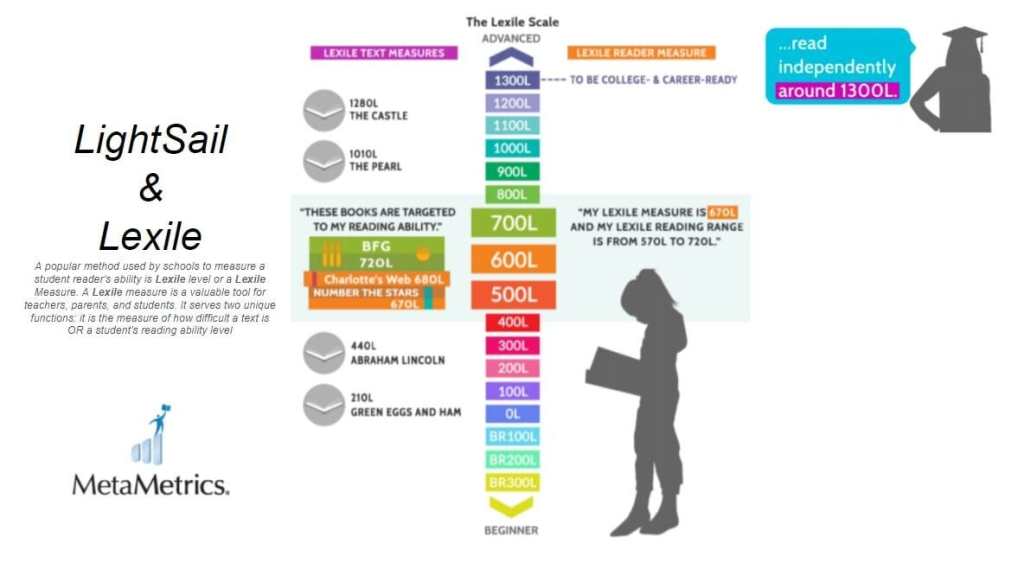
Lexile Reading Levels by Grade
Below is a general Lexile reading level chart by grade. Keep in mind that these ranges are approximate and that individual students may fall above or below these bands.
Kindergarten (K)
Lexile Range: BR (Beginning Reader) to 200L
At this stage, children are learning to recognize letters, simple words, and short sentences. Books with pictures, rhymes, and repetition are ideal.
Grade 1
Lexile Range: 190L to 530L
Students begin to develop basic reading fluency. Simple storybooks, early readers, and texts with clear structure help build confidence.
Grade 2
Lexile Range: 420L to 650L
Children start reading longer sentences and paragraphs. Vocabulary and comprehension skills begin to expand at this stage.
Grade 3
Lexile Range: 520L to 820L
Third grade often marks the transition from learning to read to reading to learn. Students read to gather information and answer questions.
Grade 4
Lexile Range: 740L to 940L
Readers are expected to understand more complex plots, character development, and themes in fiction and nonfiction texts.
Grade 5
Lexile Range: 830L to 1010L
Students explore texts that require critical thinking and deeper understanding of cause and effect, argument, and evidence.
Grade 6
Lexile Range: 925L to 1070L
Middle school reading introduces abstract themes, multiple perspectives, and rich vocabulary.
Grade 7
Lexile Range: 970L to 1120L
Students are encouraged to compare texts, analyze tone and purpose, and draw conclusions from context.
Grade 8
Lexile Range: 1010L to 1185L
At this level, readers should be able to comprehend high-level texts with complex structures and challenging content.
Grade 9
Lexile Range: 1050L to 1260L
High school students are expected to engage with academic and literary texts with more independence.
Grade 10
Lexile Range: 1080L to 1335L
Critical reading, analytical essays, and literary analysis become key components of learning.
Grade 11-12
Lexile Range: 1185L to 1385L+
By now, students are preparing for college-level reading. Texts include advanced literature, nonfiction, and academic materials.
Tips for Using the Lexile Chart
Combine Lexile With Interest
Just because a book falls within a student’s Lexile range doesn’t mean they’ll enjoy it. Always consider personal interests when choosing reading materials. A student is more likely to engage with content that excites them, even if it’s slightly below or above their range.
Don’t Rely Solely on Numbers
Lexile levels don’t measure everything. They don’t account for age-appropriateness, content themes, or background knowledge. Use them as a guide, not a strict rule.
Monitor Progress Over Time
Reading growth takes time. Use Lexile scores periodically to monitor improvement and adjust reading goals as needed. Celebrate small gains—they indicate progress in comprehension and vocabulary development.
Final Thoughts
The Lexile Reading Levels by Grade chart is a helpful reference for understanding where students typically fall on the reading scale. While it shouldn’t be the only tool you use to assess reading ability, it can offer valuable insights into a child’s development. Combined with interest-based choices and teacher support, Lexile levels can help students build strong reading habits and confidence throughout their academic years.
 Lexile Reading Levels by Grade Chart